
Ice vs. Heat for Pain: Which to Choose for Pain, Swelling, and Stiffness
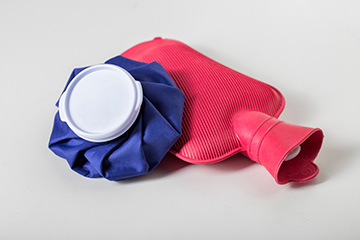
You tweak your back lifting a box, roll your ankle on a run, or wake up with a stiff neck. Whatever the pain, you likely end up asking the age-old question, “Ice pack or heating pad?”
Both can ease pain, but they work differently. Cold calms swelling. Heat loosens stiffness. Choose the right one and you’ll feel better sooner. Choose the wrong one and you could end up more swollen or stiffer than when you started.
Quick Guide
Use ice for: new injuries, swelling, and flareups after activity.
Use heat for: ongoing aches, muscle tension, and arthritis stiffness
When Should You Use Ice?
Cold therapy narrows blood vessels and slows blood flow to the injured area. This helps limit swelling and inflammation, and it temporarily numbs nerve endings, which dulls pain.
Ice is usually the better choice for:
- New, or acute, injuries. Sprains, strains, bumps, and bruises that happened within the last 48 to 72 hours.
- Swelling. If the area is puffy, warm to the touch, or red, cold helps calm it down.
- Flare-ups after activity. Tendinitis or overuse pain that acts up after a workout, a long shift on your feet, or a day of yard work.
- Post-workout soreness in a specific spot, such as a runner’s shin splints or pitcher’s elbow.
How to Use Ice Safely
More ice isn’t necessarily better. Applying cold for too long or placing ice directly against your skin can cause tissue damage.
For most minor injuries:
- Apply an ice pack for about 15–20 minutes at a time, then wait an hour in between.
- Place a thin towel or cloth between the ice pack and your skin to protect it from frostbite.
- Try a bag of frozen produce like frozen peas or a gel pack. Both mold to the shape of your joint.
When Should You Use Heat?
Heat therapy works best when stiffness or muscle tension is the main problem rather than fresh swelling.
Warmth opens blood vessels and increases circulation, bringing oxygen and nutrients to the area. It also helps tight muscles relax and improves flexibility in stiff areas.
Heat is usually the better choice for:
- Chronic, or long-lasting, pain. Ongoing aches that don’t come from a fresh injury.
- Muscle tension and spasms. A tight lower back or knotted shoulders from desk work.
- Arthritis stiffness. Achy, stiff joints, especially first thing in the morning.
- Warming up before activity. Applying heat before stretching or exercise can help stiff muscles loosen up.
How to Use Heat Safely
Heat should feel soothing and comfortable. If it feels hot, turn it down.
When using a heating pad or warm compress:
- Limit sessions to 15 to 20 minutes.
- Never fall asleep while using a heating pad.
- Avoid heating areas that are swollen, bruised, or that have an open wound.
- For full-body stiffness, try a warm shower or bath.
Don’t Put Heat on Fresh Swelling
A heating pad can feel great on a new sprain, but heat increases blood flow to the area and can make swelling worse. As a general rule, use ice for the first two to three days after an injury. Once the swelling goes down, switch to heat to loosen stiffness and help you move more freely. If stiffness lingers, physical therapy can help you rebuild strength and mobility.
When in Doubt, Find Out What’s Causing the Pain
Ice and heat can ease symptoms, but they don’t fix the underlying problem. See a specialist if you:
- Can’t put weight on the injured joint
- Notice numbness or tingling
- See an obvious deformity
- Still have swelling after a few days
- Have pain that keeps coming back or gets worse
For new sprains, strains, and other injuries, OrthoIllinois Injury Express offers walk-in care. For ongoing pain, schedule an appointment with our orthopedic specialists to find the right treatment for you.

